Jackson is celebrating its legacy in heavy metal with a new collection of four limited-edition signature instruments inspired by some of the genre’s most iconic players: David Ellefson, Marty Friedman, Randy Rhoads and Scott Ian.
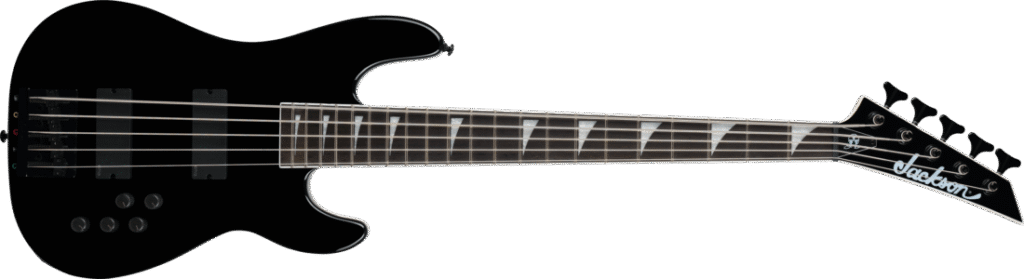
Faithfully recreated from the original instruments, the collection pays tribute to four defining pieces of Jackson history while bringing their legendary designs to a new generation of musicians. Among them is the Limited Edition Legend Series Signature David Ellefson CB V Concert Bass, inspired by the instrument played by the former Megadeth bassist throughout his career.
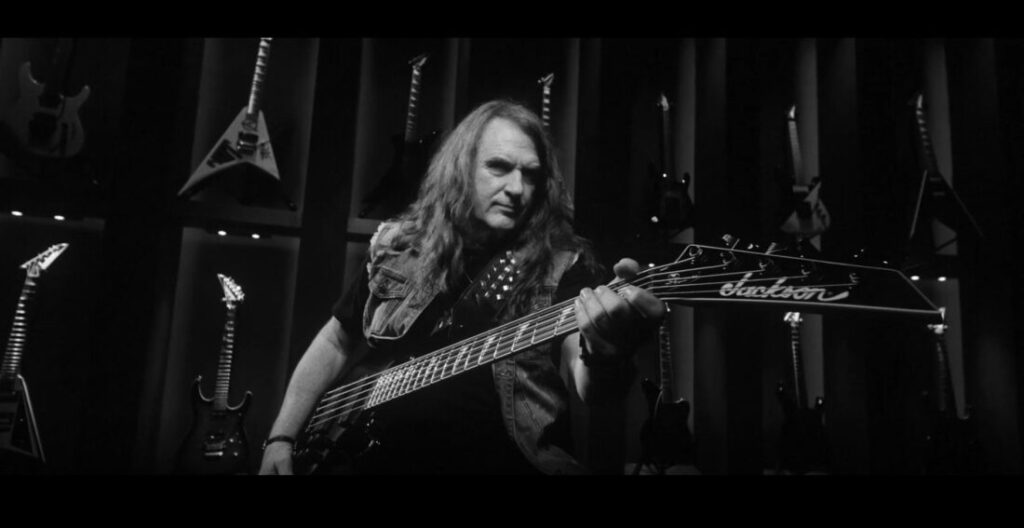
Everblack caught up with David Ellefson to discuss the design and features behind his new signature Jackson bass, the evolution of his unmistakable tone, his legacy with Megadeth, his Bass Warrior Tour and what lies ahead with Metal Church and his other musical projects.
Can you tell us about the design process behind your new Jackson Legends Series signature bass?
DE: We modeled this first bass guitar off of the 20th anniversary Jackson “Rust in Peace” limited edition model that we offered back in 2011. As far as the features and the aesthetics, what we’ve upgraded is the Jackson high mass Bridge and the Korean manufacturing, which I really love. This bass is also of a much lighter weight which I think is fantastic for the aggressive music that I like to play and overall comfort on the body.
What are some of the standout features of the new signature bass that you’re most excited for players to experience?
DE: The Emg pickups and active electronics are always a fantastic upgrade to any instrument. I also like the oversized fret markers up on the top of the neck and the weight of the instrument is such a terrific accent, while still retaining a super articulate and well-rounded tone.
Your bass tone has become one of the most recognisable sounds in metal. How did you approach capturing your signature sound in this bass?
DE: I find tone is always in the player’s hands and ears, and how that player interprets a sound to sit within a musical context. For me playing in very loud, high octane, high gain guitar based heavy metal, it was important that I find the frequencies where my bass can be heard, and my voice as a player can be recognized. Because I play in loud mid-range focused guitar style bands, I found I reside very clearly with a very thick bottom end, scooping out the mid range to allow room for the guitars to breathe, and then re-entering the frequency map up in the very top end with my plectrum to have a very clear and distinct articulate sound where you can really hear the notes I’m playing. If you look at it on a graphic equalizer, it’s what we call a “California Smile”: boosted low end, scooped mids and then returning to a boosted top end.
Looking back on your career with Megadeth, what are some of the defining moments that stand out to you as a bassist and performer?
DE: In the earliest days on the first two records, I was essentially using parts of my PA system as amplification. As we transitioned into the Capitol Records years of the band I was afforded the luxury of bigger recording budgets which allowed for my tone to develop, in particular on the “so far, so good… so what” album with Jackson Guitars as my go to instrument. Overall, I found that working with top level record producers ultimately became my best bass lessons. They really helped me craft some fantastic basslines and how to work within the context of making hit records. From a performance point of view, the early days are always rough, but that’s what galvanizes us to become the musicians and the people that we are later in life. Once you’re able to graduate to the bigger stages like we did with countdown to extinction and through most of the 90s and beyond that was because we put those early miles in learning the ropes along the way.
You’ve influenced generations of bass players and helped define thrash metal. How do you view that legacy today?
DE: I consider myself fortunate that I made that move to California right after high school in 1983. I landed in Hollywood, California at the exact perfect time for my musical passions with heavy metal to actually have the runway to develop that into something with lasting legacy. The thrash metal genre was in its infant stage and I’m fortunate that I was there at the doorstep of what would be the next big music output for heavy metal.
Are there any particular recordings, performances, or bass parts in the Megadeth catalogue that you’re especially proud of? Perhaps moments like the iconic bass solo in “Take No Prisoners”?
DE: I think with Megadeth music what I understood came from my formative years as a tenor saxophone player in Orchestra band growing up in school. I felt like Megadeth songs really tapped the fullest potential of each of the musicians in the band. Utilizing each musician’s potential as well as treating each position in the band as both a rhythm and lead performer really made our music something extraordinary. We determined from the beginning that we would have lead bass, drums, guitar and vocals. In this way, everyone would naturally have their background role, but also a featured role, and it allowed us to make music that I feel has really become timeless.
What inspired the Bass Warrior Tour, and what can fans expect from it?
DE: Initially I started with the Basstory concept, which was born out of a spoken word book tour I did in Australia back in 2015. That ultimately opened the door for me to start to become a solo artist while also being a member of a band like Megadeth. Moving forward, I took the Bass Warrior concept across Europe with a dedicated band from Italy because of their extraordinary musical prowess and abilities to play pretty much anything I put in front of them. We really work together well and in 2026 I just started to theme the tour around the “countdown to extinction” album in its entirety. We’ve had really good success with that and the fans really love seeing us perform those songs live across the whole of Europe.
What are your favourite memories of touring Australia?
DE: Some of my favorite memories go all the way back to 1991 with our debut of Megadeth in the country on the “Rust in Peace” tour and then even more recently going down there with Kings Of Thrash in 2023 and 2024 respectively. Australia is a fantastic rock ‘n’ roll country, and I think by its very nature understands and supports a wide variety of both domestic and international music. It’s one of my favorite territories to visit on tour.
Can Australian fans expect to see you back here soon?
DE: Yes for sure! Now that I’m performing in Metal Church there has been talk of putting that somewhere in our touring plans. And, of course Kings Of Thrash and even solo endeavors have been very well received in Australia so I look forward to always keeping the country as part of my regular touring plans.
Between Jackson, touring, and other projects, what are you focused on right now?
DE: For me right now, I’m really putting my focus on Metal Church. It’s nice to have a new home where I can be comfortably nestled into not only our new album and more new music moving forward, but also performing some incredible classics. I’ve been such a huge fan of the band over all the years and it’s really a pleasure to be a member of the group now. With that said, there’s always new music in the pipeline for other endeavors as well. I’m really enjoying the flexibility to be involved in a number of different musical outlets these days.
What’s next for you in the year ahead?
DE: Metal Church has an entire world tour now through 2027 with plans of more releases in the foreseeable future and of course that doesn’t take into account the unexpected calls and emails to show up in new musical opportunities to which I’ve learned to be prepared because the phone always rings with exciting opportunities, too. So, stay tuned!
Limited Edition Legend Series Signature David Ellefson CB V Concert Bass
- Alder body and three-piece quartersawn maple neck: Through-body construction, graphite reinforcement rods and a stable neck designed to support aggressive playing.
- EMG 40DC and CS pickups with 3-band EQ: A noise-free signal and flexible tonal shaping to help bass lines cut through dense guitar mixes.
- Jackson HiMass 5-string bridge: Designed to improve sustain and deliver a tighter low end.
- Open-gear Hipshot tuners: Precise tuning adjustments and reliable stability.