Interview: Joshua Hobbins
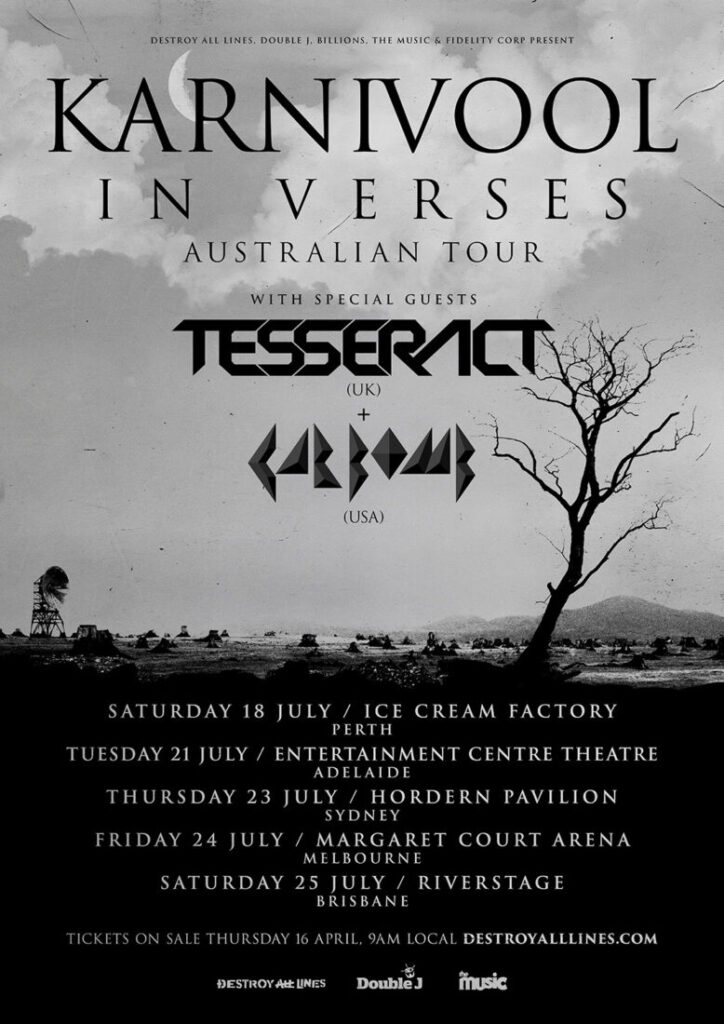
As Karnivool prepare to take their long-awaited new album In Verses across Australia alongside Tesseract, one of the tour’s most unpredictable and technically mind-bending additions comes in the form of New York chaos merchants Car Bomb, who will finally make their Australian debut this July.
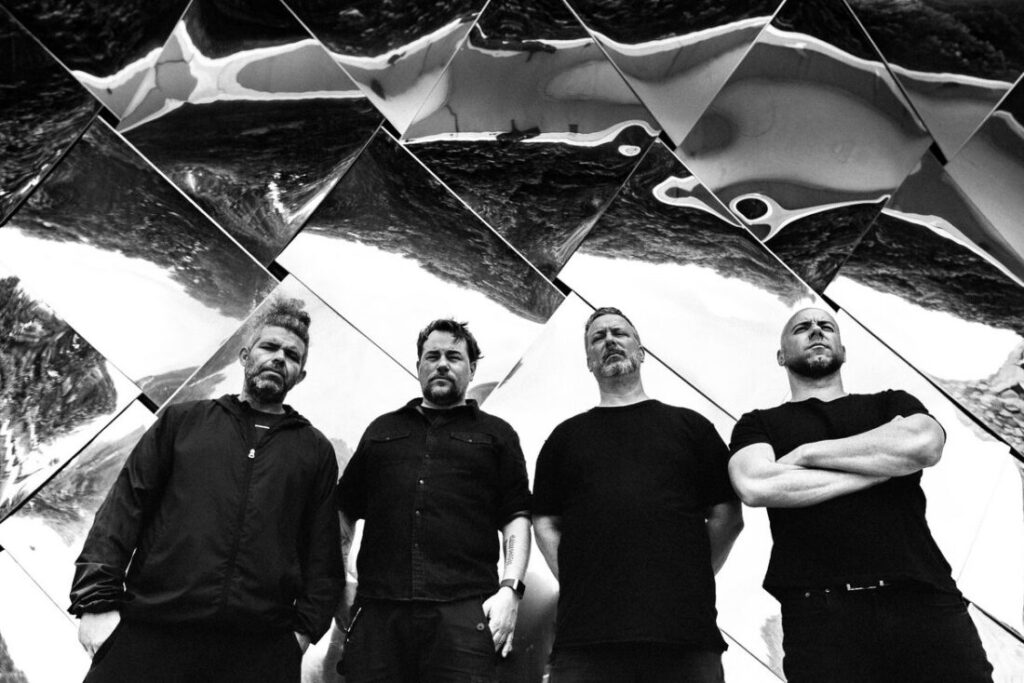
Known for their warped polyrhythms, impossible-to-follow arrangements and explosive live performances, Car Bomb have spent the last two decades carving out a sound entirely their own — one that continues to challenge even the most seasoned heavy music fans and musicians alike. Ahead of the tour, we caught up with bass player Jonny Modell to talk about the band’s evolution, writing rhythms like “glyphs and graphics,” the songs still too dangerous to attempt live, and what Australian audiences can expect when Car Bomb finally hit our shores for the first time.
Around the Centralia era, there was this wave of insanely technical, heavy bands — The Dillinger Escape Plan, Between the Buried and Me, The End, Ion Dissonance, etc. But Car Bomb felt less tied to metalcore or deathcore trends and more abstract. Were you consciously trying to avoid fitting into a particular scene?
Jonny: Definitely not. We were just kind of a new band and really just getting acquainted, playing with each other, writing, and incorporating all these different styles into whatever the hell we were doing. I think that drove us more than anything else going on around us.
We were all — and still are — big fans of those bands. I’ve been a huge Ion Dissonance fan forever. The Dillinger Escape Plan obviously hold a special place in all our hearts. Greg and Liam are very friendly and they’ve been very good to us. What they did for the scene is incredible. All those bands stood out for what they were doing, but we really just tried to do our own thing.
There’s an almost electronic sense of rhythm in Car Bomb’s music. Do you think about riffs more like rhythmic programming than traditional guitar writing sometimes?
Jonny: I think we’re all math nerds, so we see it more from how it all breaks down than anything else. Greg is doing the bulk of the writing these days and he’s very visual. If you see how he writes, it really is a lot of glyphs and graphics that define some of the crazy rhythmic stuff. So it’s probably more that than anything else. But certainly rhythmic, and there’s definitely a strong emphasis on that.
The guitar tone manages to stay incredibly articulate even in the densest sections. Has your approach to gain and clarity changed significantly since the early records?
Jonny: That’s definitely more of a Greg question, but I can speak a little bit on his evolution. He definitely went from traditional amplifiers into Axe-FX, and he really took to that and honed his sound over many years. I think he figured out a way to make it sound huge while still keeping the clarity so everything can be heard, because there’s a lot of really intricate stuff we’re doing.
A lot of modern heavy bands chase heaviness through sheer low end, but Car Bomb often sounds heavier through tension and dynamics. Is that something you consciously think about?
Jonny: I think there is some of that in the writing for sure. There’s a lot of push-pull stuff and dynamics — building to something, maybe even pulling back a little, then smashing. That’s intentional a lot of the time. Instead of just hitting you over the head immediately, we definitely like that buildup, tension, and release. I think it’s an effective tool for all musicians to use, and we definitely employ it.
Has there ever been a section you wrote that even the band collectively thought was too far rhythmically?
Jonny: I think we’ve all embraced whatever the challenge is. Greg and I like to joke that a lot of what we do is smoke and mirrors. “Fooled them again” is kind of a thing with us after a show.
But Elliot definitely has the biggest challenge because he’s the one taking the ideas and making them sound like 25 different ideas. Sometimes it’s a struggle, but it’s never been like, “Fuck that, no way we’re playing that.” We embrace it. It can be scary at first, but when you finally get it, it feels so good.
Is there a particular song in the catalogue that still feels genuinely dangerous to play live?
Jonny: Yeah, there are a bunch. There are songs we’ve never played live that we always talk about wanting to play. “The Seconds,” which is the last song on w^w^^w^w, and “Sets” off Meta — that’s the one Frank Mullen guest sang on.
“Spirit of Poison” is another one we actually do play live sometimes, but it’s so tricky that we tend to mess it up and then pull away from it again. We all really love that song, though. Those are probably the biggest ones.
I wonder if either of those will make it onto the setlist for the Australian shows.
Jonny: I’ll tell you right now, Karnivool and Tesseract are a different kind of band than us in some ways, so we’ll probably focus more on our accessible material so those fans can latch onto it first and then find out what the hell we’re really about.
I don’t think the super complicated stuff is going to make it mostly because we can’t really play it, and we only have two months to get it together. But I’ll bring it up at the next meeting.
You were supposed to tour with Animals as Leaders last year before the cancellation. Was there anything unique planned for those shows or anything you were especially excited about creatively?
Jonny: We were super excited because I think it was just us and Animals — no third band. For our first time in Australia, it was going to be really special. We’re very friendly with those guys and they’ve been so good to us. Being on the road with them is always fun, so doing it down there seemed really special.
We were obviously bummed when it got cancelled, but I think we were still far enough away from it that we weren’t really planning stage production or setlists yet. Maybe Elliot was going to wear costumes and Mike was going to put a dress on — no, I’m kidding. But those shows would have been amazing. That cancellation sucked, but getting this tour instead is an insane rebound.
Were you familiar with Karnivool before this tour came together?
Jonny: Yeah, definitely. It’s funny — we did a headline tour in the UK in 2017 and I remember this guy asking me if I’d heard of Karnivool. We had this long conversation about them, and years later he came up to me and reminded me about it.
That’s probably when I first became aware of them. We saw them at ArcTanGent Festival and they absolutely destroyed. Their catalogue is fierce and that new record is ridiculous. We became friendly with Drew, and I think that friendship is probably what helped sneak us into this whole thing.
For those of us seeing Car Bomb live for the first time on the upcoming Australian tour, what do you hope we take away from the experience?
Jonny: I think there are two things about our live show. Number one is that people don’t think we can actually do it. Number two is that we don’t play to a click or tracks or anything, so everything breathes while we play. Tempos can shift a little here and there, and we’re basically flying without a net. I think people have fun watching us pull that off. It reminds me of seeing Fantômas live — it was so abstract and crazy that you’d laugh at how ridiculous it was, but it was so good. I think people get a similar vibe from us, like, “How are they doing that?”
Tickets on sale from destroyalllines.com