Interview: Joshua Hobbins
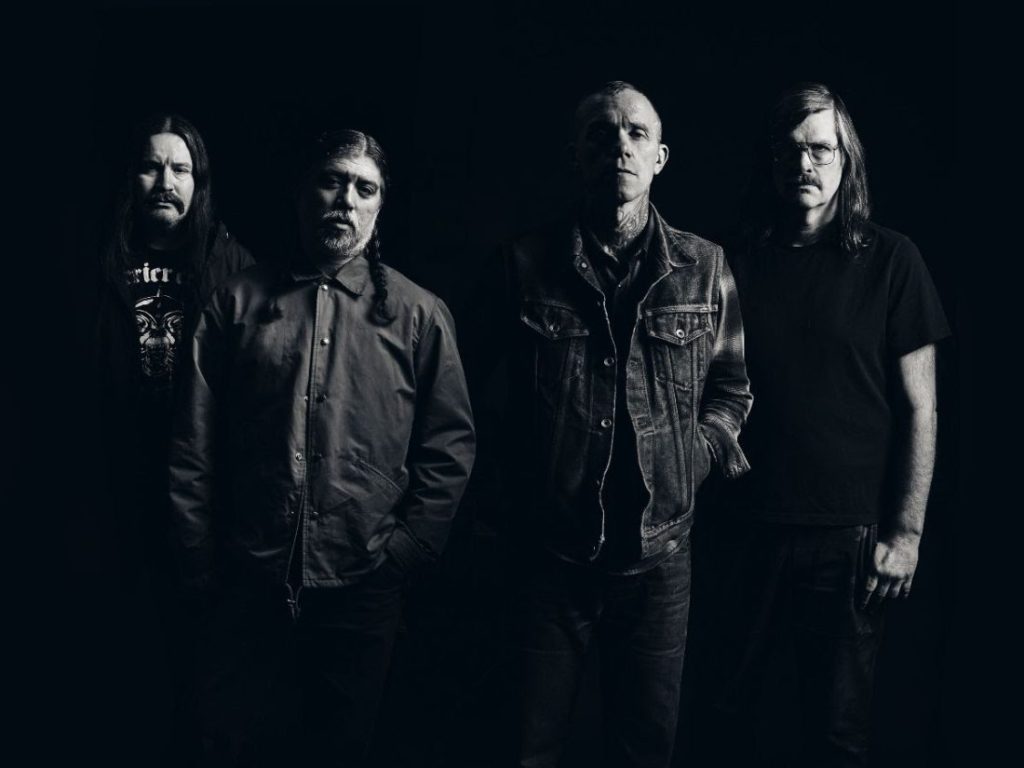
For more than three decades, Converge have delivered musical and emotional catharsis, consistently placing purpose before perception and intent before interpretation. From their 2001 landmark Jane Doe to 2021’s Bloodmoon: I—their striking collaboration with Chelsea Wolfe—the band have produced some of the most compelling music, lyrics, and visual art of the 21st century. Few bands have left a deeper imprint on the underground imagination.
It would seem unlikely that a band 35 years into its existence would create one of its strongest works with an eleventh full-length. And yet, Love Is Not Enough may stand as the apotheosis of Converge’s long journey through the punk, hardcore, and metal continuum. What vocalist and lyricist Jacob Bannon, guitarist and producer Kurt Ballou, bassist and vocalist Nate Newton, and drummer Ben Koller have created is a fierce artistic statement on the turbulence of living—one that sharpens their collective strengths to a razor’s edge.
Josh had the chance to ask Kurt Ballou and Jacob Bannon about the writing, production, and emotional weight behind Love Is Not Enough.
Converge albums often feel like snapshots of a specific psychological moment rather than chapters in a long narrative. How do you know when a body of material has cohered into an album, rather than just another phase of writing?
Kurt Ballou:
Once we get into album-writing mode, we’ll meet at my studio for a few days every couple of months to write and demo. I usually listen back and make notes right after we write, then again just before the next session, but not much in between. That time away is crucial for perspective. Once we feel like we’re close to an album’s worth of material we’re happy with, we’ll schedule recording time. Having a deadline is usually the motivator we need to finish things and decide which songs to focus on.
After decades together, conflict can either erode a band or sharpen it. What does creative disagreement look like inside Converge now compared to earlier years?
Kurt Ballou:
True. I think we all have a pretty good ability to laugh at ourselves now. There’s not a lot of ego-driven conflict anymore. While we may not agree on everything, we all share the same ultimate goals, so there’s mutual respect—even in disagreement.
This album feels less about speed or technical flexing and more about weight, groove, and emotional pressure. Was there a conscious decision to pull back from the more frantic side of Converge and let the songs breathe?
Kurt Ballou:
I wouldn’t say it was deliberate—it’s more the result of how we’ve naturally morphed over the years. We want to make memorable songs and albums that can be listened to in their entirety. Dynamics are crucial to that.
The rhythm section feels absolutely dominant on this record. Nate’s bass has real sleaze and swagger, and Ben’s drumming is both vicious and surgical. How much did they shape the direction of these songs during writing?
Kurt Ballou:
We write most songs as a group, so it’s hard to pinpoint individual contributions, but they played incredibly well on this record and are a vital part of the band.
“To Feel Something” feels genuinely claustrophobic, like someone spiralling internally. Jacob’s delivery—especially the line “I just wanted to feel something”—hits hard. For you, Jacob, does writing still come from that same confrontational place, or has it shifted as life changes?
Jacob Bannon:
I don’t view writing as confrontational, but I do see it as coming from a place of vulnerability. If there are shifts, they’re more like moving from lane to lane on the same highway. The road continues, the mileage racks up. It all comes from the same internal place where I go to work through things happening in my own life.
The production walks a fine line between raw and precise—acerbic, but incredibly clear. Kurt, how important is that balance now? Are you chasing atmosphere more than aggression at this stage?
Kurt Ballou:
I’m just trying to get the vibe right—whatever the song needs to be.
“Beyond Repair” feels apocalyptic and industrial, while “Gilded Cage” features an instrumental passage that wouldn’t feel out of place on a Russian Circles record. What role do those instrumental moments play emotionally within the flow of an album?
Kurt Ballou:
Musical contrast can be a very effective vehicle for emotional expression. It’s always good to have something compelling to focus on during instrumental passages.
“Amon Amok” opens with unexpected swagger before dropping into something darker and more dirge-like. That interplay between groove and violence feels deliberate. How do you decide when to let a riff sit instead of explode?
Kurt Ballou:
Yeah, we love a good intro. We grew up on thrash metal and hardcore, and the way those classic bands set up songs—especially live—had a huge impact on us. That influence really comes through on this album.
“Make Me Forget You” might be the most melodic Converge have sounded in years, with harmonic guitars, gang vocals, and a real sense of yearning. Was that vulnerability something you consciously embraced, or did it emerge naturally?
Kurt Ballou:
That’s something we’ve always had in us. You can hear it in A Single Tear, Eye of the Quarrel, Aimless Arrow, Sadness Comes Home, Wishing Well, Orphaned, and others. In this case, it may have also been informed by our long-standing relationship with Disfear and the hardship and loss they’ve experienced.
This album doesn’t feel nostalgic or self-referential—it feels present. After 35 years, how do you avoid becoming trapped by your own legacy while still honouring what makes Converge Converge?
Kurt Ballou:
Thanks. I think it’s about balancing those things while staying fresh and of the moment. We always strive to make records that exist outside of a specific time period. We still love making music together and, unfortunately, still very much need the cathartic release it provides.
Finally, when someone listens to this album alone—away from the chaos of a live show—what do you hope lingers once “We Were Never The Same” brings the record to its close?
Kurt Ballou:
I hope it stands as a symbol of the vitality and endurance of us as a unit, and of our connection with our audience.
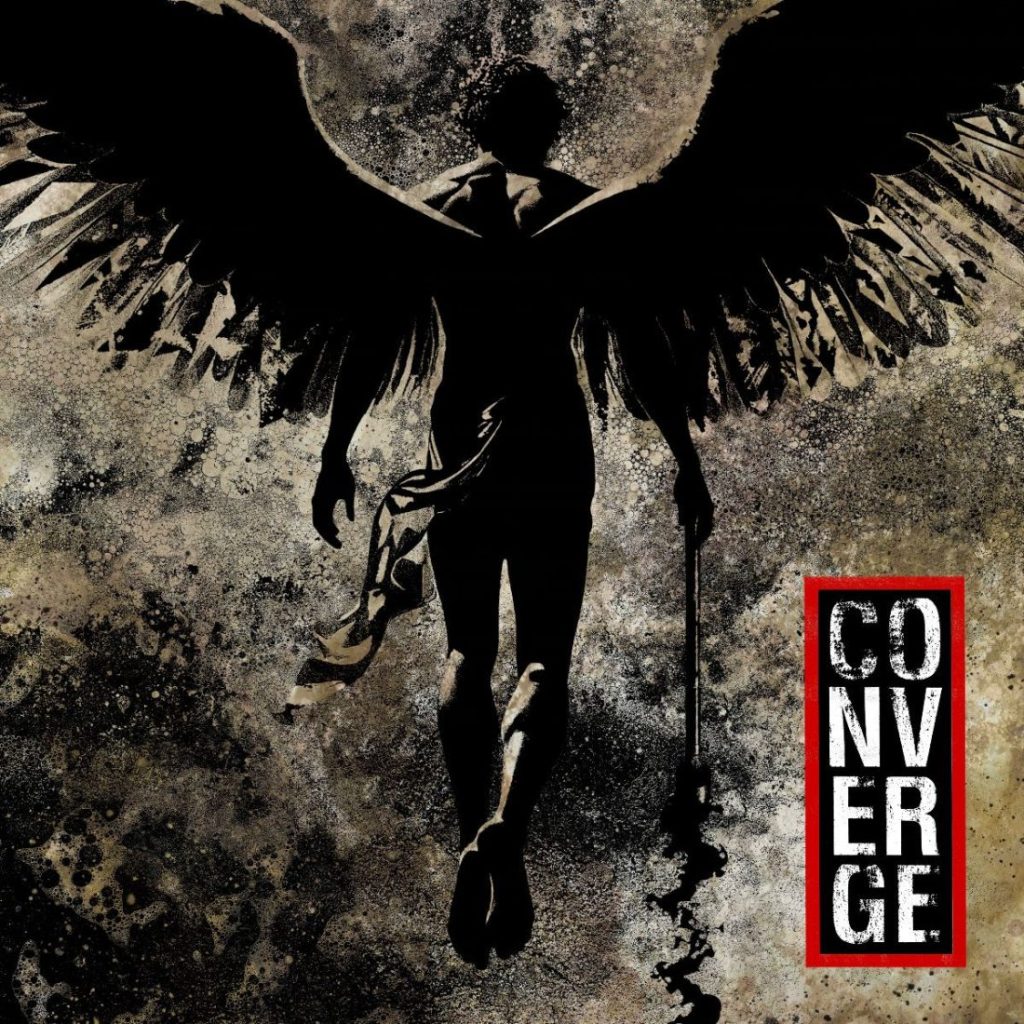
Love Is Not Enough was recorded and mixed by Kurt Ballou at God City in Salem, Massachusetts, with engineering assistance from Zach Weeks. Jacob Bannon did the artwork and design, creating an image for each song and a commanding cover depicting a celestial witness to a world aflame. “We still identify this band as the outlet that’s essential to our lives,” Bannon says. “We give everything we have to it. Being past your average middle age, we’re starting to see deeper than before into a variety of places. And I don’t think that’s specific to us. I think that’s something that’s utterly relatable.”
Love Is Not Enough is out Feb 13 via Epitaph Records / Deathwish Records.
Pre Order – here