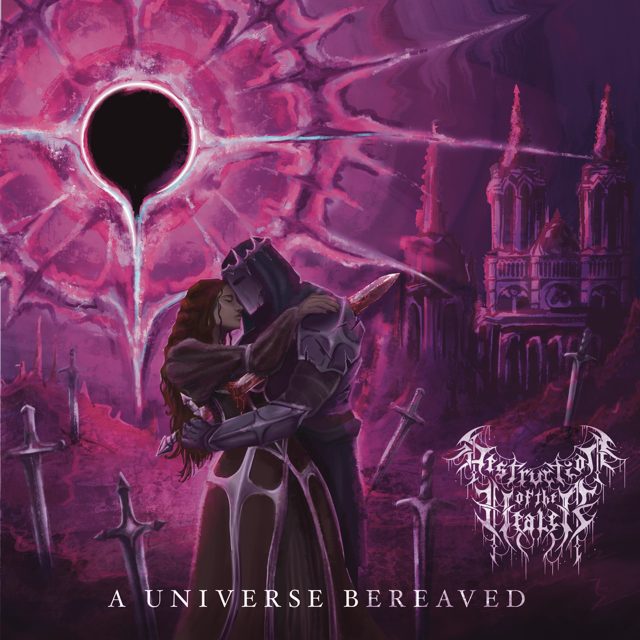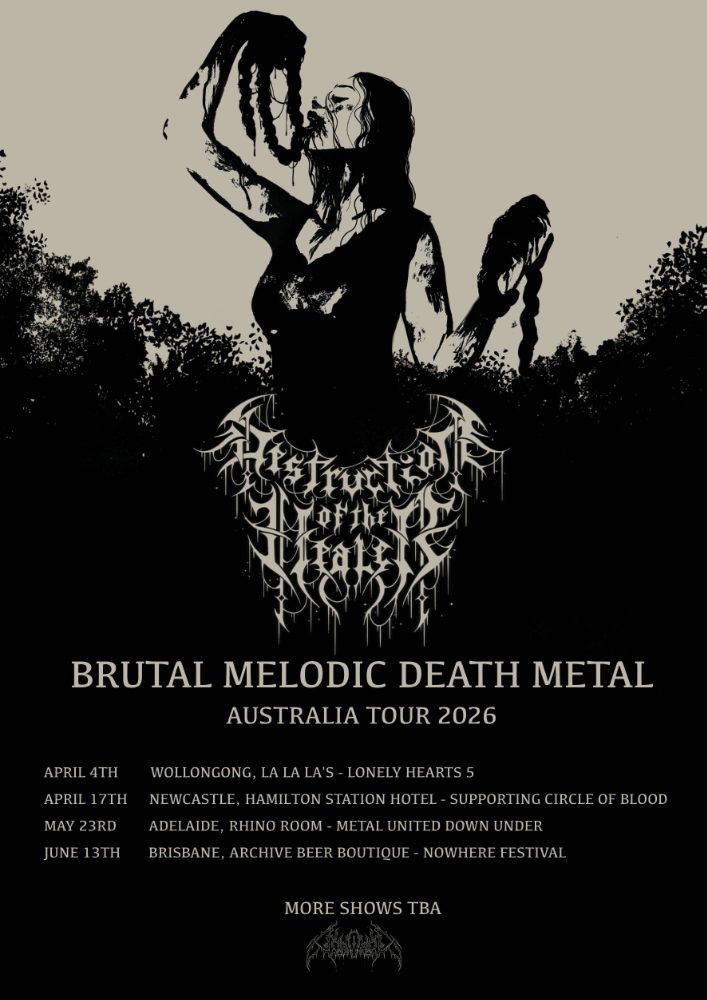
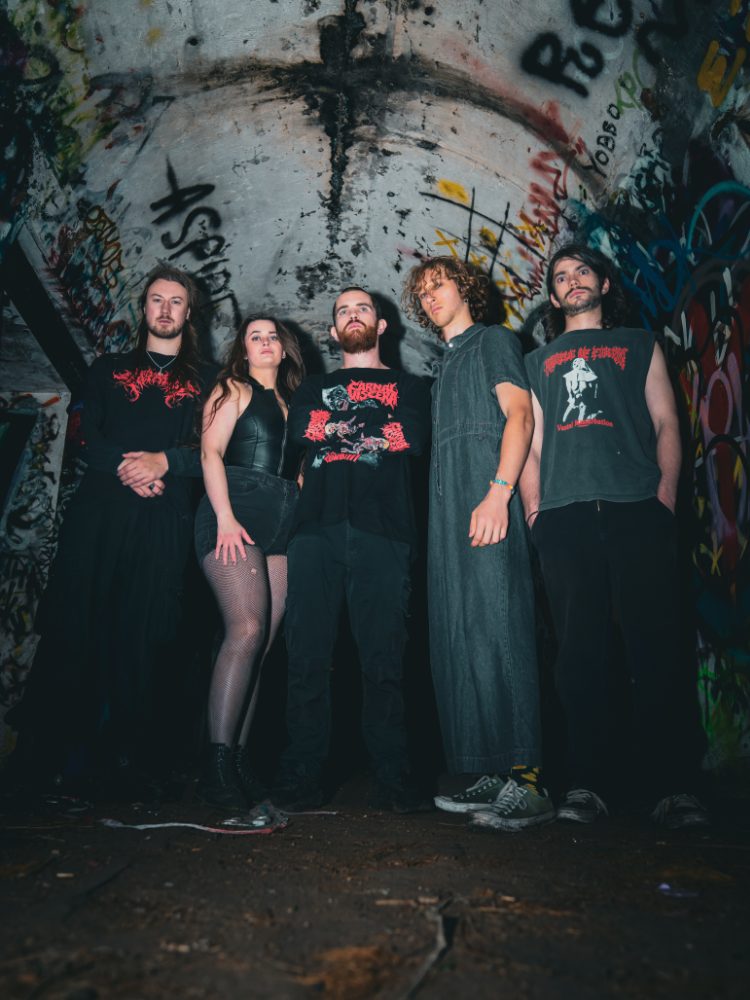
Destruction of the Healer aren’t interested in playing it safe. With their new album ‘A Universe Bereaved’ on its way, and the first single ‘Bestial Hunger’ already turning heads, we spoke to the band about evolving their melodic death metal roots into something far more savage, technical and emotionally crushing, balancing cinematic atmosphere with relentless brutality. We caught up with the band to talk about their evolution, songwriting, DIY ethics, the strength of the Australian underground, and why beauty means nothing without chaos lurking underneath it.
Your earlier material had a stronger atmospheric and melancholic edge, what inspired the move toward something far more savage and confrontational on the new album?
Jackson: Since our prior releases we’ve become far more technically proficient as musicians, and this album was about pushing that as far as possible. The songs are still melodic at their core, but with a far more brutal sound driven by faster and more technical playing. Even the moments that lean into atmosphere are more technical in execution, employing classical counterpoint to explore harmonies and tonalities not often heard within melodeath.
“Bestial Hunger” feels extremely visual and cinematic in the way it unfolds. When writing, do you think more in riffs, moods, or actual imagery first?
Darby: Usually the idea starts small from a riff and invokes a certain mood, I then try and expand on that idea and further invoke that imagery. “Bestial Hunger” started as the verse riff and I tried to make some other sections that captured that same unrelenting brutality. I tried to add some contrast in the bridge/solo leaning into a more melodic side so that the main riff didn’t feel any less brutal as the song went on.
A lot of modern death metal leans heavily into either pure brutality or pure technicality. How important is it for Destruction of the Healer to keep strong songwriting at the centre of everything?
Darby: I would say for us it’s about balancing brutality with melody, and groove with technicality. We want to keep our music melodic and have parts that are beautiful and memorable but also have that modern evil, heavy sound that calls for a mosh pit. We try to keep our songs with a strong groove and easy to follow along too which can be a challenge when trying to showcase technicality. A lot of our songs are contrast of brutality and beauty, groove and chaotic speed, sometimes these blend together for some of our best moments.
You’ve shared stages with a wide range of heavy acts across the East Coast, what’s something you think the Australian underground metal scene gets right that people outside it might overlook?
Jackson: One thing the Australian underground gets right is the lack of severe genre cliqueness. You’ll see death metal shows full of punk and hardcore fans and vice versa. There’s a genuine sense of community across the entire heavy and alternative spectrum, and most gigs are packed with members of other bands there to support each other. That mutual respect and shared passion is something really special that people outside the scene often overlook.
There’s a very DIY backbone to the band, from recording through to production and community involvement. Does maintaining that independence give the band a stronger identity?
Jackson: Maintaining that independence is a huge part of our identity. It gives us full creative control across everything, from writing and recording through to production, so nothing gets diluted or compromised. At the same time, we’re not doing it in isolation. We’ve built a tight circle of people around us who we support and who support us in return, and that sense of community feeds directly into what we create.
We also lean into rawness over perfection. In a landscape where everything is hyper-polished and increasingly artificial, we’d rather capture something real, even if it’s imperfect. That grit and honesty translates into something heavier and more human, which feels far more true to who we are as a band.
Between the melodic influences, brutal death metal elements, and occasional blackened or symphonic textures, do you ever consciously set boundaries on what doesn’t belong in a Destruction of the Healer song?
Darby: I think our music is really a balance between brutality and beauty so we try really hard to follow that line. Tread too far to either side and it wouldn’t be us. We have some symphonic elements and clean sections but try and use them to highlight other parts and create contrast, at the same time we avoid going too heavy and writing riffs that are too atonal or chaotic. Anything goes but it has to be balanced, no beauty without brutality and no brutality without beauty.
When people finally hear ‘A Universe Bereaved’ front-to-back, what do you think will surprise them the most?
Jackson: We’ve been focused in our direction yet there remains a lot of contrast between songs. We draw inspiration from a wide range of styles and subgenres depending on what the track demands. Despite the variety, people might be surprised by how cohesively the album flows seamlessly between the heavier and more atmospheric tracks. It really epitomises what this band is about and what we’ve always aimed to create: something equally beautiful and brutal.